Hello everyone, I'm Cathy.
I gave up a week before Thanksgiving this year.
Every November I tell myself the same thing: this is the year I dry my own orange slices. Four hours of slicing, oven-watching, and flipping every twenty minutes, for twenty slices that come out uneven in color and thickness anyway. This year I looked at the calendar — swim practice, soccer, Emma's parent-teacher conference, Lucas's checkup — and quietly turned off the oven, opened Amazon, and bought this bag of dried orange slices that "saved my November."
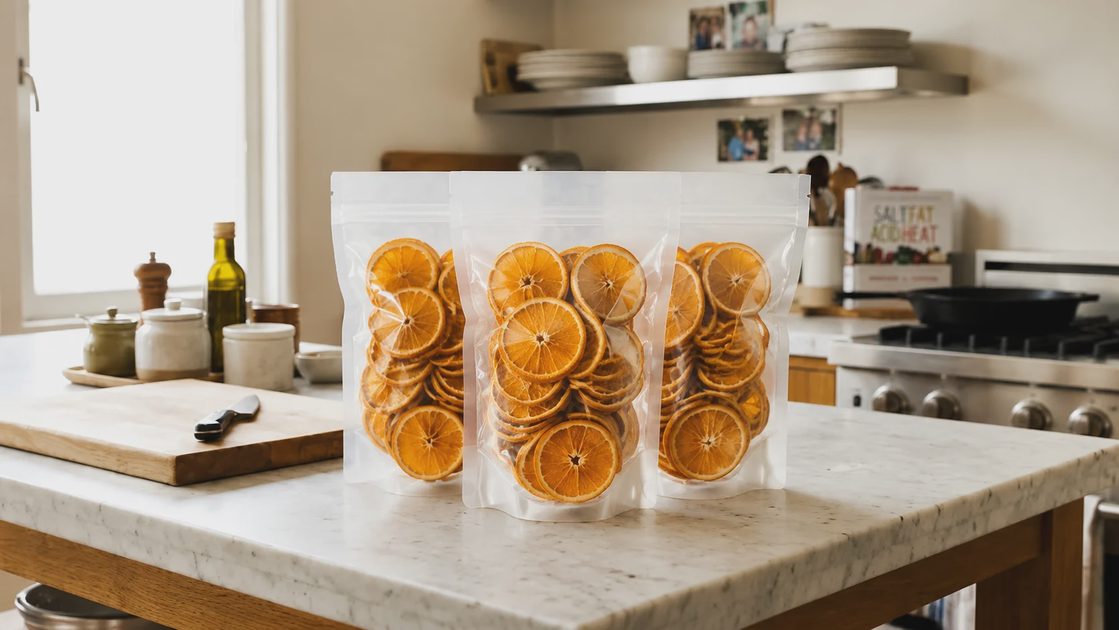
I'll be honest, I didn't expect much. Homemade dehydrated fruit versus mass-produced usually isn't close — the factory stuff tends to come out dull-colored, unevenly cut, or smelling faintly of a warehouse shelf.
Then I opened the bag and took a sniff, and my first thought was: okay, that's the right smell.
Bright, faintly sweet, with that specific tang of orange peel — not the fake-fresh smell of something sprayed with flavoring, just what a dried orange is actually supposed to smell like.
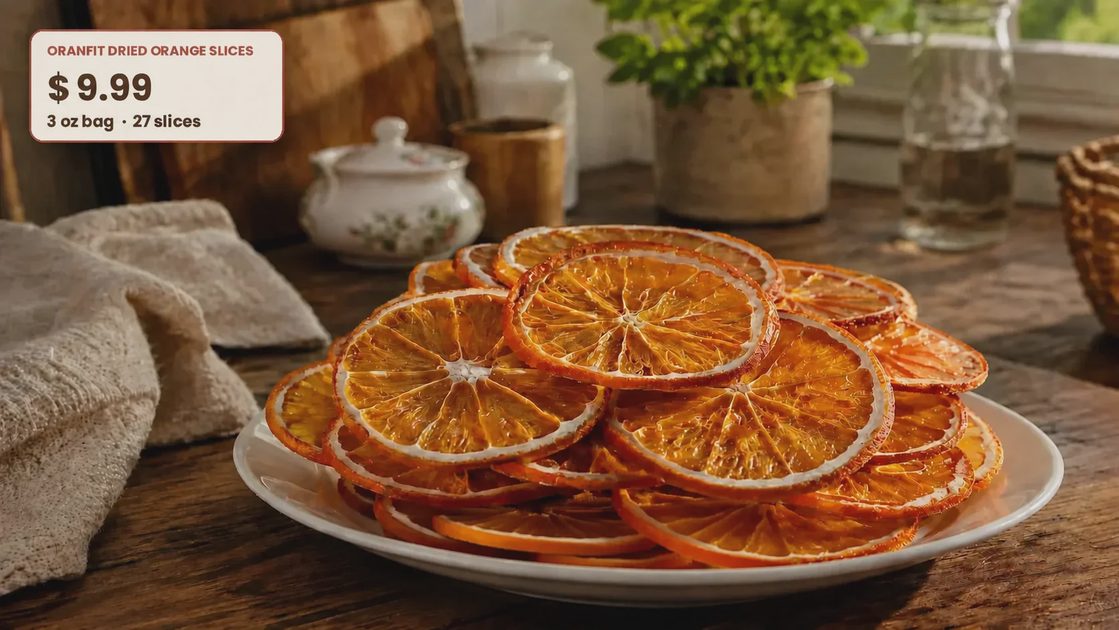
$9.99 for a 3-ounce bag. I counted them out — 27 slices. The listing says 23 to 37 per bag, so I landed somewhere in the middle. Every slice was cut far more evenly than anything I've ever managed by hand — almost too perfectly round. The color was a full, deep amber-gold, no browning, no crumbled bits, stacked neatly in the bag like they'd been sorted by someone with more patience than me.
Where it actually earns its keep
The table:This is the one I get asked about most. I've stopped trying to build a big centerpiece from scratch. I grab a handful of the slices, scatter them around the candles we already have out, add a little greenery from the yard, and I'm done — before the oven timer for anything else has even gone off.
The drink situation:A slice floated in warm apple cider for the kids, one in an old fashioned for the adults who've earned it by that point in the day. Pouring a drink suddenly turns into a whole hosting moment. I keep a jar of the Oranfit slices by the bar cart specifically for this — if it's not within arm's reach, nobody remembers it exists.
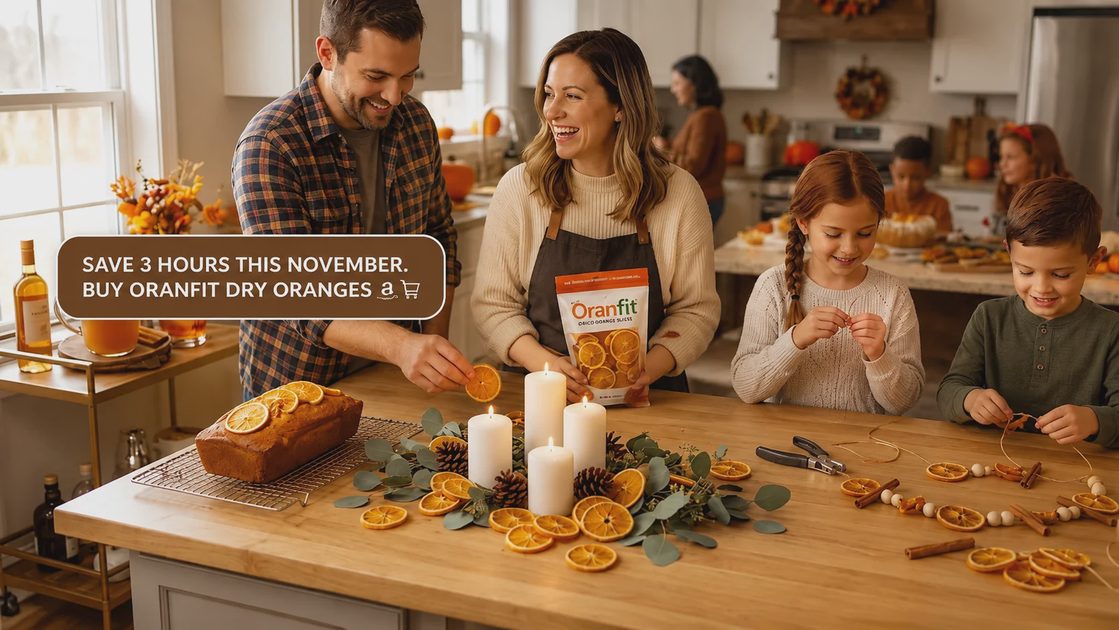
The kid project:Every December, Emma and Lucas turn Oranfit dried orange slices into their craft supply of choice. Hole-punch the slices, string them onto twine with cinnamon sticks, and you've got a wreath — no hot glue gun required, which in this house counts as a minor miracle. Tyler, fourteen, has aged out of caring about the craft itself, though he'll still eat whatever falls off the string. Ryan gets roped in most years too, mostly because Emma runs the operation like a foreman and hands him the hole punch whether he wants the job or not. Last year they made three wreaths in one afternoon; one fell apart by evening and got quietly retired to the compost bin before anyone noticed.
The baking flourish:Press a slice of Oranfit's dried oranges into the top of a loaf cake before it bakes and it looks like real effort went in. It takes ten seconds. I've also lined a few slices along the bottom of a Bundt pan before pouring in the batter for an orange-spice cake, so it comes out with a ring of slices baked right into the top — the kind of cake everyone photographs before anyone's allowed to cut into it.
The part where I actually read the label
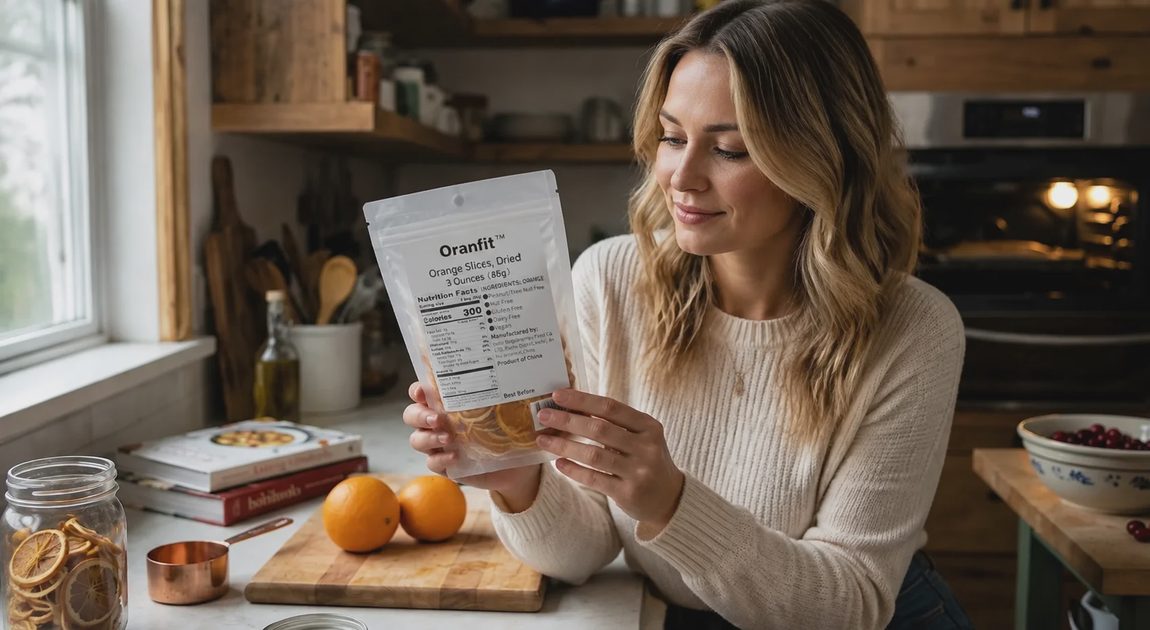
Old habits. I spent five years auditing ingredient lists for a supply chain team, then fifteen more doing it for four kids, and that instinct doesn't switch off just because something's headed for the mantel instead of a plate. What I check for is simple: one ingredient, oranges, and nothing else. No sulfites doing the color-preservation work, no added sugar propping up a shortcut it doesn't need. This bag's label holds up. My own homemade batches, by comparison, usually come out sticky and a little grey at the edges, because I never get the drying time exactly right.
So — worth it or not?
I ran the numbers, because of course I did.
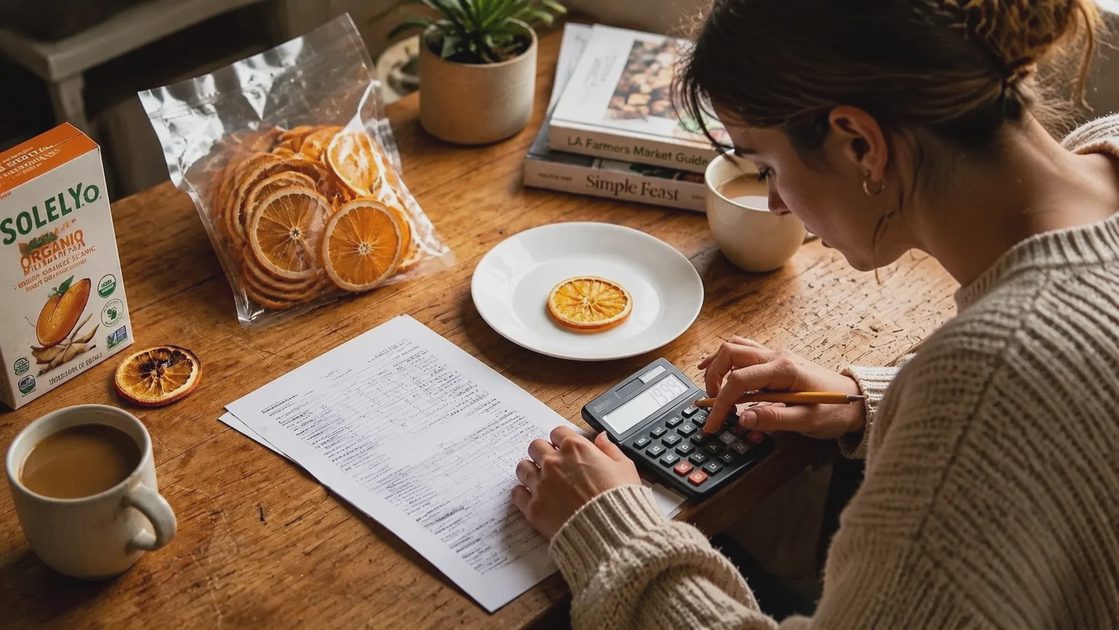
$9.99 for 27 slices. If I bought organic oranges myself, a 3-ounce batch of dried slices needs roughly six to eight fresh oranges, which in Los Angeles runs about $8 to $10 in organic pricing. On paper, doing it myself is cheaper.
But time is money. It's the time standing in the kitchen slicing thirty rounds of orange, flipping them every twenty minutes, watching the oven so nothing scorches. It's the time lost re-buying oranges when a batch burns. It's time out of the one week before Thanksgiving when I already don't have enough of it left over to read Emma a bedtime story.
Sometimes buying the ready-made version isn't laziness — it's respecting what your own time is worth.
I know some of you are thinking homemade means more. I get that, I really do. But in a house with four kids, meaning doesn't have to come from slicing every piece of fruit by hand. Sometimes it comes from spending twenty dollars, saving three hours, and using those three hours to actually sit down and eat dinner with your family.
One thing to know before you buy
This Oranfit bag has become a standing holiday-season repurchase in my house, but I'll say the honest thing: it smells good, it looks good, eating it is not the point. It's not sweet, it's not crisp — it's just what dried orange peel tastes like, and it leans decoration, not snack. Don't reach for it expecting a treat. Expect a good-looking piece of garnish, and expect that a six-year-old will occasionally peel one off the mantel before dinner. It's happened. Lucas was fine. The wreath mostly survived too.
If you're looking to cut yourself a break this Thanksgiving, this is the easy win. Just buy it early — by the second week of December, every home cook in America has had the same idea, and the good batches sell out fast.