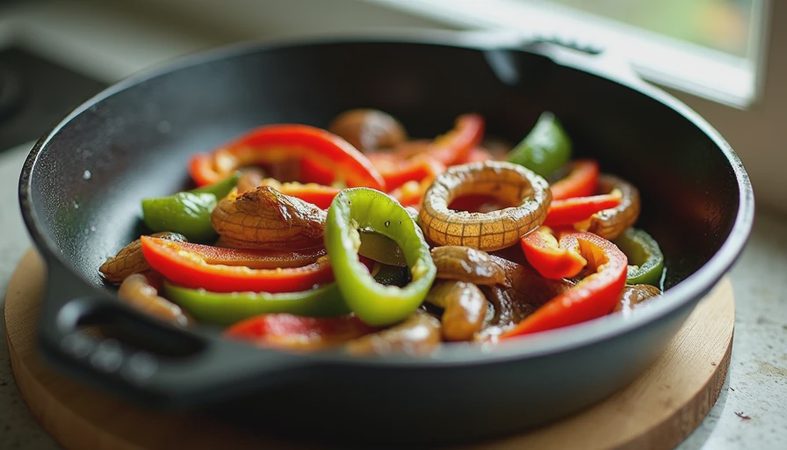
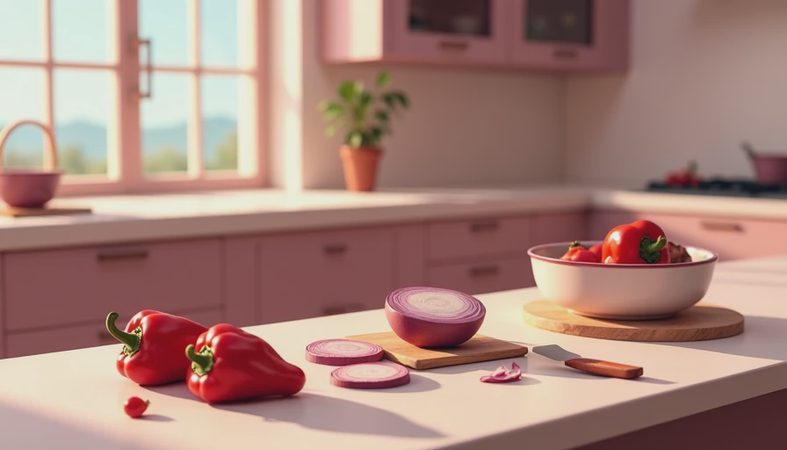
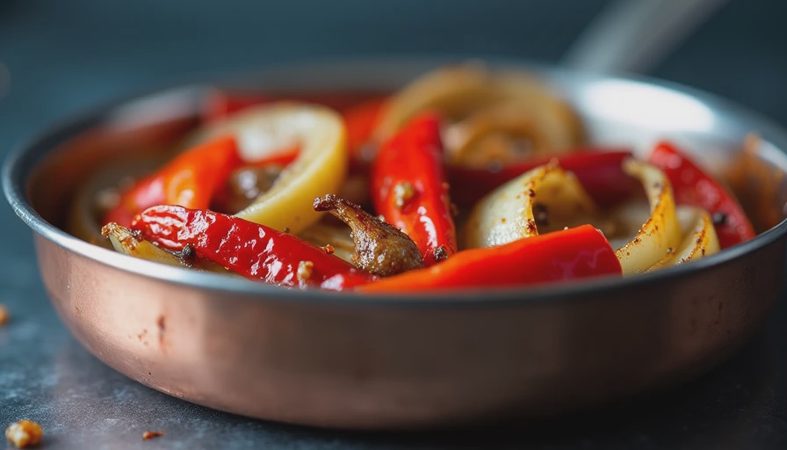
Hello everyone, I'm Cathy. When I bake onions and peppers, I get a side dish that tastes like I planned dinner carefully, even when I remembered dinner at 5:12 p.m. The vegetables turn sweet at the edges, soft in the middle, and useful enough to serve with almost anything. This recipe makes six generous servings and takes about 10 minutes to prepare.
Use a large rimmed sheet pan, not a small casserole dish. Crowding traps steam, and steamed peppers do not develop the browned edges we want. Heat the oven to 425°F, line the pan with parchment if you dislike scrubbing, and pull out your biggest mixing bowl.
Ingredients for baked onions and peppers
You will need:
- 2 large yellow onions, peeled and cut into 1-inch wedges
- 3 bell peppers, preferably a mix of red, yellow, and green, seeded and sliced into 1-inch strips
- 3 tablespoons extra-virgin olive oil
- 1 teaspoon kosher salt
- 1/2 teaspoon black pepper
- 1 teaspoon garlic powder
- 1 teaspoon dried Italian seasoning
- 1 tablespoon chopped fresh parsley, optional
- 1 tablespoon balsamic vinegar, optional for finishing
I usually buy organic onions and peppers when the price difference is reasonable. For this recipe, the vegetables are the whole meal support team, so I want them fresh and firm. Avoid peppers with soft spots or wrinkled skin. One limp pepper can make the pan watery, and nobody needs another mystery puddle near the potatoes.
Cut the onion wedges through the root end so they hold together better. Separate a few layers, but leave most pieces in rough chunks. Slice the peppers evenly. Thin strips cook faster than onion wedges, which creates a problem: the peppers turn floppy while the onions are still firm. Matching the size matters more than making everything beautiful.
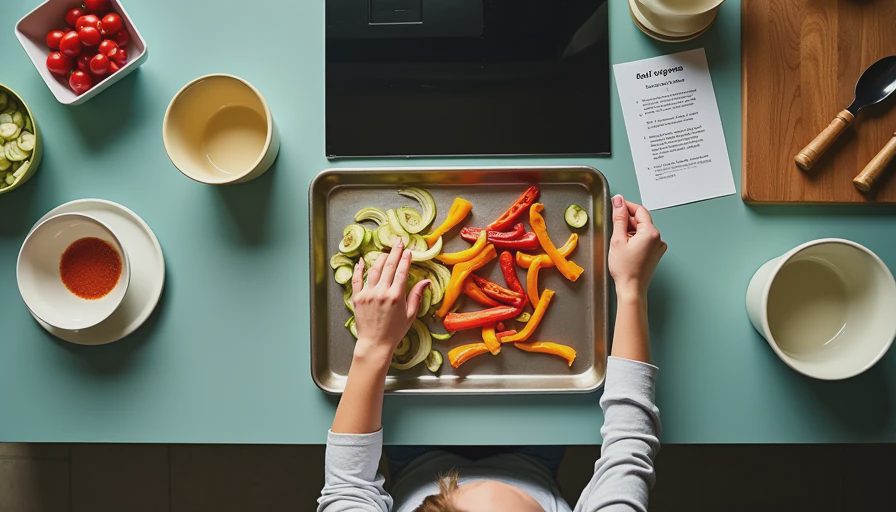
How to bake onions and peppers
Put the onions and peppers in the bowl. Add olive oil, salt, pepper, garlic powder, and Italian seasoning. Toss until every piece has a light coating. Spread the vegetables across the sheet pan in one layer. A little space between pieces helps hot air reach the cut surfaces and encourages caramelized edges.
Bake onions and peppers for 20 minutes, then stir with a wide spatula. Return the pan to the oven for another 15 to 20 minutes. The total cooking time is usually 35 to 40 minutes. They are ready when the onions are tender and golden at the edges, while the peppers have softened but still have enough structure to pick up with a fork.
For deeper color, switch to broil for the final 1 to 2 minutes. Stay near the oven. Broiling is not a time to answer a text, start laundry, or investigate why a child is suddenly quiet. The difference between browned and burned can happen before you finish saying, please use a plate.
When the vegetables come out, taste one onion piece. Add a small pinch of salt if needed. For a sharper, sweeter finish, drizzle on balsamic vinegar and toss. Fresh parsley makes the pan look more finished, but my children have never awarded extra points for parsley, so use it only if you already have some.
Why the oven works better than a crowded skillet
A skillet is fine for a small batch, but six servings usually require multiple rounds. If you pile everything into one pan, the vegetables release moisture and simmer in it. That gives you soft onions and peppers, but very little roasted flavor. A sheet pan spreads the ingredients out and gives the moisture somewhere to escape.
The 425°F temperature is hot enough to brown the natural sugars in the onions without turning the peppers leathery. Olive oil improves browning and carries the garlic and herbs across the vegetables. Do not pour on extra oil to compensate for a crowded pan. Space is the fix, not more fat.
The first time I made bake onions and peppers, I used a 9-by-13-inch glass baking dish because it was sitting on the counter. The vegetables were tender, but they looked pale and tasted more boiled than roasted. The next night I used a half-sheet pan, and the edges finally did their job. The pan was ugly afterward, but dinner was excellent. I call that a fair trade.
Easy ways to serve the vegetables
These roasted vegetables are flexible enough for a busy weeknight. Spoon them beside grilled chicken, pork chops, salmon, or steak. Add them to scrambled eggs with shredded cheddar for breakfast. They are also excellent over rice, quinoa, couscous, or warm crusty bread with a fried egg on top.
For sandwiches, let the vegetables cool for five minutes, then layer them into a toasted hoagie roll with provolone and sliced chicken. For tacos, chop them into smaller pieces and add black beans, avocado, and salsa. If you are serving pasta, toss them with penne, a little pasta water, Parmesan, and a spoonful of pesto.
To bake onions and peppers as a complete dinner, add sliced fully cooked chicken sausage during the final 15 minutes. Smoked sausage, turkey sausage, or plant-based sausage all work. Make sure raw meat reaches its safe internal temperature separately; vegetables should not be used as a substitute for checking meat with a thermometer.
Make-ahead, storage, and reheating
You can cut the vegetables and mix the seasoning up to 24 hours ahead. Store them covered in the refrigerator, but wait to add the oil until just before baking. If the prepared vegetables look wet, pat them dry. Excess moisture delays browning.
Cooked bake onions and peppers keep in an airtight container in the refrigerator for about four days. Reheat them on a sheet pan at 400°F for 8 to 12 minutes. The microwave is faster, but it makes the texture softer. For lunches, I do not mind the microwave. For dinner, the oven takes only a few extra minutes and brings back some of the roasted edges.
You can freeze the cooked vegetables for up to two months, although the peppers will be softer after thawing. Use frozen portions in soup, omelets, rice bowls, or quesadillas rather than expecting their original texture. Cool them completely before freezing, and label the container with the date because every freezer contains one unlabeled bag of ancient food.
Common mistakes when you bake onions and peppers
The most common mistake is cutting everything too thin. Keep onions and peppers around 1 inch thick so they finish together. The second mistake is skipping the stir halfway through. The underside can brown quickly while the top stays pale, especially on a dark pan.
Do not wash the sliced vegetables and put them straight into the oven. Dry them first with a clean towel. Water on the surface has to evaporate before browning begins. Also, avoid adding fresh garlic at the start unless you enjoy bitter little pieces. Garlic powder is dependable here; fresh minced garlic is better stirred in during the last 10 minutes.
If the vegetables are still firm after 40 minutes, keep baking in 5-minute intervals. Oven temperatures differ, and oversized onion wedges take longer. If they are soft but pale, move the pan to a higher rack and broil briefly. Bake onions and peppers until they look properly roasted, not simply until the timer makes a noise.
Kitchen tip: put the sheet pan in the sink before calling the kids to dinner, because somehow the vegetables disappear but the dirty pan stays behind.