Hello everyone, I'm Cathy. This blueberry jelly recipe is for the mornings when everyone wants toast, nobody wants the same flavor, and I am trying to pack four lunches before 7:30. It uses fresh or frozen blueberries, lemon juice, sugar, and powdered pectin. The finished jelly is bright, smooth, and firm enough to stay on toast instead of sliding onto the plate. You will need about 45 minutes, plus cooling time.
My first batch was too soft because I treated the boil like a polite simmer. Jelly needs a real rolling boil, not a few lazy bubbles around the edge. Once I fixed that and started using a thermometer as a backup, the recipe became dependable.
Why this blueberry jelly recipe works
Blueberries have plenty of flavor but do not always provide enough natural pectin for a firm jelly, especially when the berries are very ripe. Powdered pectin handles the setting, while lemon juice adds brightness and helps balance the sugar. Straining the cooked fruit removes skins and seeds, giving you a clear, spreadable texture.
Use fresh berries in summer or unsweetened frozen blueberries during the rest of the year. Frozen fruit is often picked when ripe, so it makes a perfectly good batch. Do not thaw it first; put the berries and water directly into the saucepan. If your berries are particularly sweet, the lemon juice is not optional. It keeps the flavor from tasting flat.
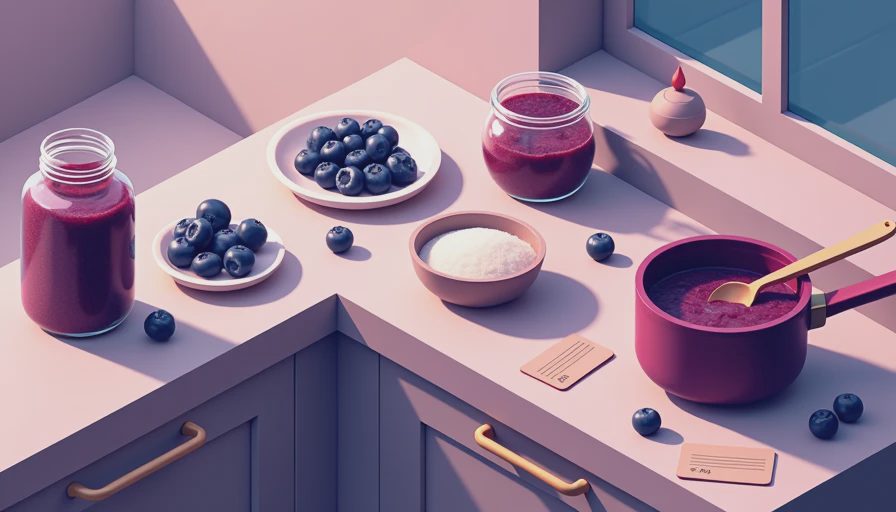
For four small jars, gather 4 cups blueberries, 1/2 cup water, 2 tablespoons fresh lemon juice, 1 box powdered fruit pectin, and 4 cups granulated sugar. You also need a large stainless-steel saucepan, a potato masher, a fine-mesh strainer, a ladle, and four clean 8-ounce jars with lids. The large pan matters because jelly foams dramatically, and a small saucepan will behave like it has personal grievances.
How to make blueberry jelly
Put the blueberries and water in the saucepan over medium heat. Crush the berries with the masher as they warm, then bring the mixture to a steady simmer. Cook for 8 to 10 minutes, stirring every minute or two, until the berries look collapsed and the liquid is dark purple.
Pour the hot fruit through a fine-mesh strainer set over a large bowl. Press gently with the back of a spoon to extract the juice, but do not force all the pulp through. Pulp makes a cloudy spread rather than a clear jelly. You should have about 3 cups of juice. If you have less, add a little water to reach 3 cups; do not pour extra sugar into the pot to compensate.
Return the juice to the clean saucepan. Stir in the lemon juice and powdered pectin. Bring it to a full rolling boil over medium-high heat, stirring constantly. A rolling boil keeps bubbling even while you stir. Add all 4 cups of sugar at once, then return the mixture to a full boil. Boil hard for exactly 1 minute, stirring without stopping.
Remove the saucepan from the heat. Spoon off any foam from the surface, then ladle the hot jelly into clean jars, leaving about 1/4 inch at the top. Wipe the rims, add the lids, and let the jars cool undisturbed for 12 hours. The jelly can look loose while warm. It thickens as it cools, so do not start adding extra pectin because breakfast is impatient.
How to check the set and fix a soft batch
After cooling, press the center of the jelly with a fingertip. It should wrinkle slightly and hold its shape when you tilt the jar. A soft set is still delicious on yogurt or pancakes, but it will run across toast. Refrigerate the jars for up to 3 weeks, or freeze them for up to 6 months in freezer-safe containers with room for expansion. This is a refrigerator jelly, not a shelf-stable canning recipe. For pantry storage, use a tested water-bath canning formula and follow its processing instructions exactly.
If your blueberry jelly recipe produces a loose batch, empty the jars back into a saucepan and add 1 tablespoon lemon juice plus another 1/2 box powdered pectin. Bring the mixture to a full boil, add 1/2 cup sugar, and boil hard for 1 minute. Pour it into clean jars again. Do not keep boiling for ten extra minutes; prolonged cooking can make the jelly taste heavy and can damage the pectin.
A candy thermometer should read about 220 degrees Fahrenheit at sea level, but temperature changes with altitude. The wrinkle test and the final cooled texture are more useful than staring at one number. In Los Angeles, my thermometer and my eyes usually agree. When they do not, I trust the cooled jar.

Easy ways to use the finished jelly
This blueberry jelly recipe makes more than a toast topping. Stir a spoonful into plain Greek yogurt, spread it between peanut butter sandwiches, or warm it gently to brush over pancakes. It also works on biscuits with salted butter. For a quick dessert, layer jelly with whipped cream and crushed vanilla cookies in small glasses. The kids call this fancy; I call it three ingredients and no oven.
For a simple glaze, combine 1/3 cup jelly with 1 tablespoon water in a small pan. Warm it over low heat until smooth, then brush it over baked chicken wings or roasted carrots during the last few minutes of cooking. The sugar can burn, so keep the heat moderate and watch closely. This sweet-tart glaze is especially useful when the refrigerator contains one lonely carrot and everyone claims they are starving.
You can also make a mixed berry version by replacing up to 1 cup of the blueberries with raspberries or blackberries. Keep the total fruit amount the same. Blackberries add more seeds, so strain the juice carefully. I would not replace all the berries with strawberries; strawberries contain a lot of water and can give you a softer result unless the pectin ratio is adjusted.
Storage, serving, and ingredient choices
Use clean jars, but they do not need to be sterile for refrigerator storage if the jelly is handled properly and chilled promptly. Always refrigerate a jar after opening. A clean spoon helps prevent mold and keeps crumbs out of the spread. If a jar develops mold, an odd smell, or bubbling that was not there before, discard it instead of scraping the top.
Organic blueberries are worthwhile when the price is reasonable, especially if you are buying from a local farm and the fruit is fragrant. Otherwise, conventional berries work well after a thorough rinse. For frozen berries, choose plain fruit without added sugar. Bottled lemon juice will work in a pinch, but fresh lemon gives this blueberry jelly recipe a cleaner flavor and more reliable acidity.
Make the batch on a day when you can stay near the stove. Jelly needs stirring at the crucial moments, and a phone call is exactly when the pot decides to foam. Let the jars cool completely before judging the texture, then label them with the date. This blueberry jelly recipe is simple enough for a weekday and good enough to make a plain Saturday breakfast feel planned.
Kitchen tip: Put one small plate in the freezer before you begin; a chilled spoonful gives you a quick set check when the family starts asking whether the jelly is ready yet.