Hello everyone, I’m Cathy.
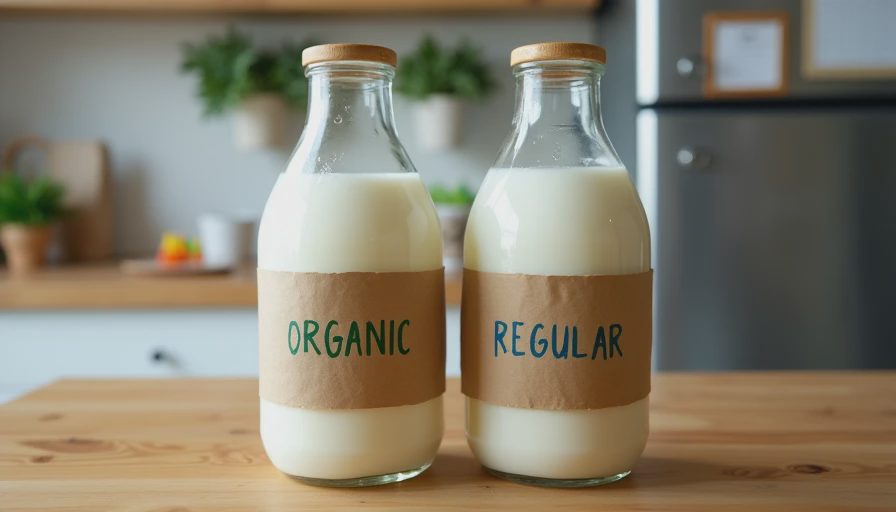
If you have ever stood in the grocery store dairy aisle staring at a wall of white cartons, watching your shopping cart bill tick past the hundred-dollar mark while holding two different gallon jugs in your hands, you know the modern parent's dilemma all too well. One jug proudly displays the word "Organic" in bright, wholesome green lettering. The other is your trusty, dependable regular milk. The organic option costs nearly double, creating an immediate psychological tug-of-war. The label’s subtle marketing implies that by buying it, you are instantly securing a golden ticket of health and immunity for your children; buy the regular one, and you might as well be feeding them industrial waste.
In a household like mine—feeding four growing kids, a hungry husband, and myself on a normal, hard-earned budget—you simply cannot afford to fall blindly for marketing illusions. So, I decided to dig past the bold print, the pastoral imagery on the front of the carton, and the guilt-inducing buzzwords to find out what is actually in our glasses. Here is what the milk labels won’t tell you, and how we finally decide which gallon makes it safely into our crowded fridge week after week.
The Real Truth About the Cow's Diet and Nutrition
To understand the core difference between the two, we first have to look at the cow's daily diet, though the reality is often less dramatic than the marketing department wants you to believe. It is true that organic milk comes from cows that eat only certified organic feed and get more outdoor pasture time, whereas regular milk comes from conventionally raised cows. However, nutritionally speaking under a laboratory microscope, both types of milk provide the exact same baseline of calcium, protein, potassium, and Vitamin D. Your children’s growing bones genuinely cannot tell the difference between the two once they are poured over morning cereal.

Sifting Through the Anxiety Around Antibiotics and Purity
The label games become even more apparent when you look at the widespread anxiety surrounding antibiotic usage in dairy farming. Many people assume organic milk is completely pure, while regular milk is swimming in medical residues. By law, however, no milk on American grocery shelves contains antibiotics of any kind. If a conventional dairy cow gets sick and requires antibiotic treatment, its milk is strictly and immediately pulled from the production line until the animal is fully clear of all medicine. Where organic milk does hold a minor advantage is in its Omega-3 fatty acid profile, thanks to that grass-heavy diet—though you can easily get those exact same healthy fats from a handful of walnuts or a piece of baked salmon for a fraction of the extra cost.
Shelf Life Realities and the Everyday Taste Test
Then there is the practical reality of shelf life and everyday taste, which the glossy front labels completely ignore. Regular conventional milk is typically pasteurized using standard High-Temperature Short-Time methods designed for quick turnaround and fresh flavor. Many organic milks, on the other hand, rely on Ultra-Pasteurization to extend their shelf life dramatically so they can survive long-haul shipping from distant organic farms across the country. The catch is that ultra-pasteurization can sometimes give organic milk a slightly sweeter, cooked, or less "fresh" taste that sharp-tongued kids notice immediately. If your children are particular about the flavor of their evening glass of milk, regular pasteurized milk often wins the household taste test hands down.
Making Peace with Your Grocery Cart
So, how do we actually handle this in our chaotic Los Angeles kitchen? We don't live in a black-and-white world, and neither should our grocery carts. If our monthly budget allows and organic milk happens to be on a good sale, I’ll happily grab a couple of cartons for the peace of mind regarding farming practices. But on a normal, high-consumption week where our family of six rips through three gallons in four days, regular, high-quality conventional milk takes the crown without a single shred of parental guilt. At the end of the day, feeding your kids a balanced, home-cooked meal matters infinitely more than whether your morning cereal milk cost four dollars extra.
I’m Cathy. Let’s get smart about what we buy.
Kitchen Tip: Don't let grocery store guilt dictate your monthly budget. Both organic and regular milk are heavily regulated, safe, and nutritious. Buy what fits your family's table and your everyday life.